Rare
In Stock
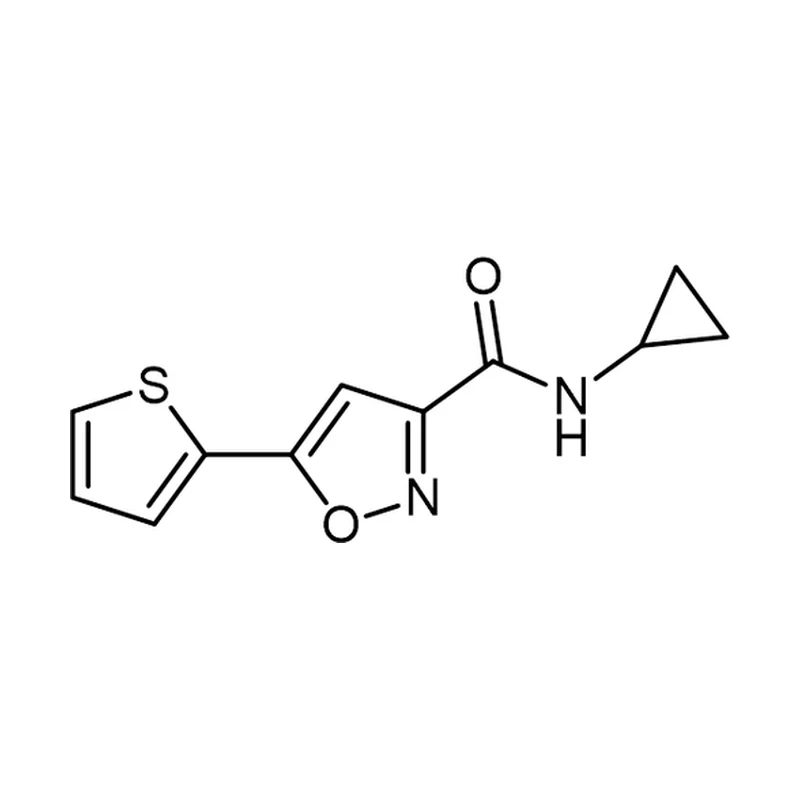
ISX-9
C₁₁H₁₀N₂O₂S
Package size
$75.00
1
Description
ISX-9 (Isoxazole 9) acts not as a single-receptor ligand but as a cell-fate switch: it drives an immature progenitor to become a neuron. Mechanism: Ca²⁺ influx through voltage-gated channels and NMDA receptors → CaMKII → MEF2 transcription factors → the NeuroD1 gene, while in parallel blocking gliogenesis. The result is a pure neuronal culture (over 95%) without cell sorting.
Beyond neurons, the same calcium-dependent switch governs other programs: cardiac differentiation of iPSCs (up to ~95% cardiomyocytes via TGF-β/Wnt), pancreatic β-cell survival (Calbindin-D28K), reprogramming of glioblastoma cells onto a neuronal path with arrest of division, and the Wnt/Axin1 and NGFR/KGF axes.
In vivo, ISX-9 crosses the blood-brain barrier; in rodents 20 mg/kg boosts hippocampal neurogenesis and improves memory without exhausting the stem-cell pool (proliferation markers Ki-67 and BrdU rise in parallel). Soluble in DMSO (~200 mM), not in water; working concentrations 2.5–20 µM.
Research Use Only (RUO). Not a medicine; not for use in humans or animals. Data are largely from in vitro and animal studies.
Beyond neurons, the same calcium-dependent switch governs other programs: cardiac differentiation of iPSCs (up to ~95% cardiomyocytes via TGF-β/Wnt), pancreatic β-cell survival (Calbindin-D28K), reprogramming of glioblastoma cells onto a neuronal path with arrest of division, and the Wnt/Axin1 and NGFR/KGF axes.
In vivo, ISX-9 crosses the blood-brain barrier; in rodents 20 mg/kg boosts hippocampal neurogenesis and improves memory without exhausting the stem-cell pool (proliferation markers Ki-67 and BrdU rise in parallel). Soluble in DMSO (~200 mM), not in water; working concentrations 2.5–20 µM.
Research Use Only (RUO). Not a medicine; not for use in humans or animals. Data are largely from in vitro and animal studies.