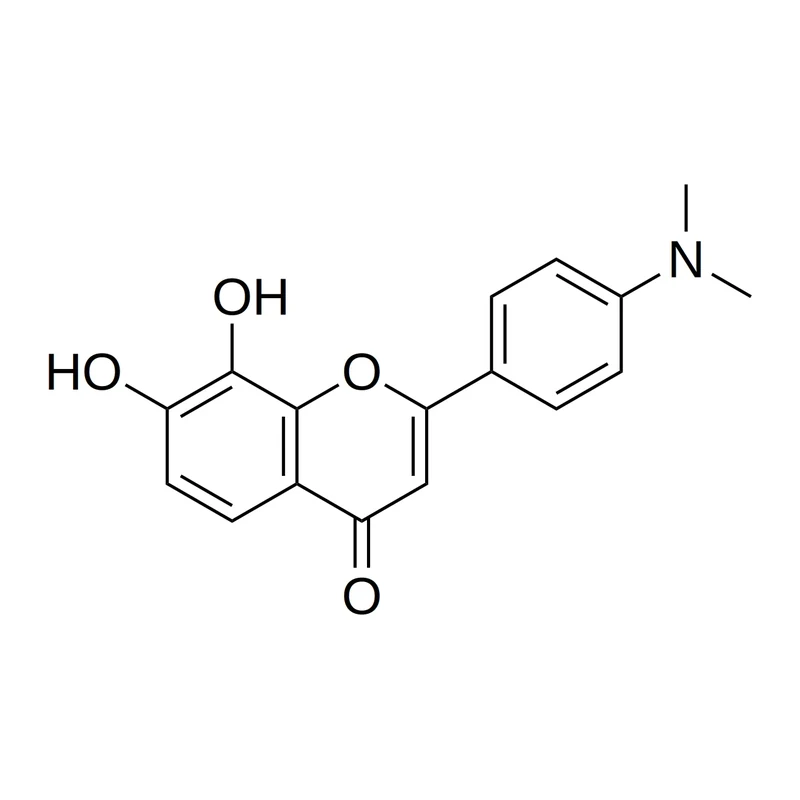
Eutropoflavin (4'-DMA-7,8-DHF, 4'-dimethylamino-7,8-dihydroxyflavone) is a synthetic derivative of the naturally occurring flavonoid 7,8-dihydroxyflavone (7,8-DHF). Introduction of a dimethylamino group at the 4' position of the phenyl ring fundamentally alters the pharmacokinetic profile of the molecule relative to the parent compound.
Mechanism of Action
The compound is a direct agonist of tropomyosin-related kinase B (TrkB) — the primary receptor for brain-derived neurotrophic factor (BDNF). TrkB binding triggers receptor autophosphorylation and activation of downstream signaling cascades: PI3K/Akt, MAPK/ERK, and PLCγ. These pathways mediate neuroplasticity, synaptogenesis, neuronal survival, and neurogenesis.
Pharmacokinetic Advantages over 7,8-DHF
Unmodified 7,8-DHF undergoes extensive hepatic first-pass glucuronidation, resulting in low oral bioavailability and T½ ≈ 30 minutes. The 4'-dimethylamino group sterically shields the molecule from rapid metabolism, yielding: (1) substantially higher oral bioavailability; (2) improved blood-brain barrier penetration due to increased lipophilicity; (3) T½ ≈ 4–8 hours in animal models; (4) TrkB activation at significantly lower molar concentrations than 7,8-DHF.
Preclinical Data
Rodent studies demonstrate dose-dependent improvements in spatial memory, learning, and memory consolidation. Activation of the TrkB/ERK/CREB cascade has been confirmed in cortical neuron cultures. The compound is under investigation in models of neurodegeneration, cognitive deficit, and depression.