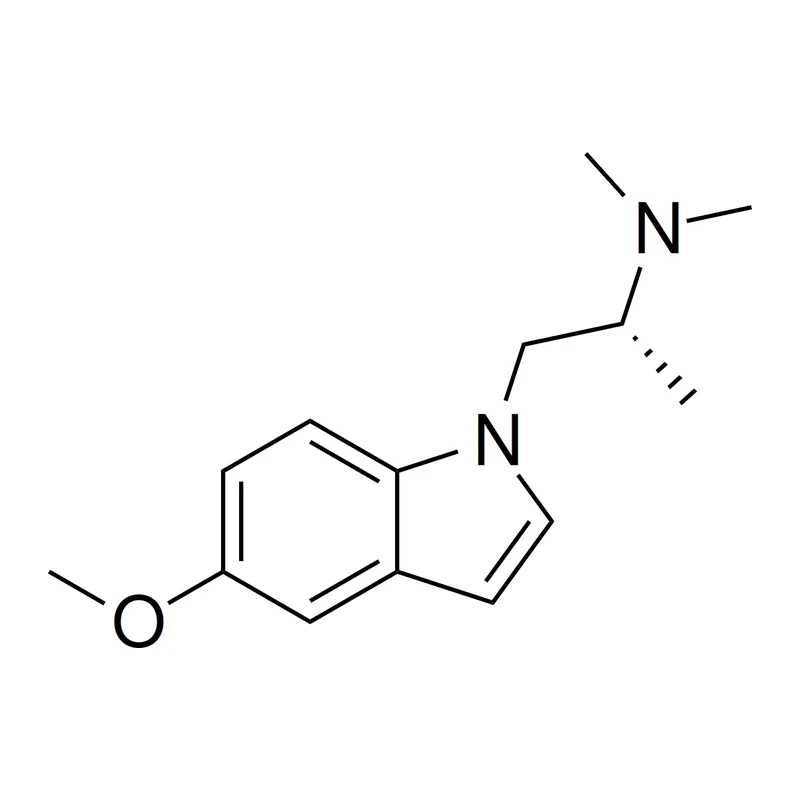
Zalsupindole (DLX-001 / AAZ-A-154) is a small-molecule psychoplastogen developed by David Olson's laboratory at UC Davis. Activates neuroplasticity as potently as ketamine or psilocin — without hallucinations, dissociation, or altered states of consciousness.
Mechanism of Action
The 5-HT₂A receptor activates two parallel intracellular pathways. Classical psychedelics (psilocin, LSD) bias the receptor toward Gq/11 proteins → massive glutamate release → hallucinogenic effect. Zalsupindole, through its unique binding geometry, selectively engages the parallel β-arrestin/mTOR/TrkB pathway responsible for synaptogenesis and dendritic spine growth, while leaving the Gq cascade largely untouched.
Partial agonism: Emax ≈ 17%, EC₅₀ ≈ 8,200 nM. Activation level is above the threshold for mTOR-dependent synaptogenesis, but below the Gq-signaling threshold required for hallucinations. 5-HT₂B antagonism eliminates the cardiac valve fibrosis risk associated with chronic receptor activation.
Intracellular penetration: the 5-HT₂A receptors responsible for neuroplasticity are localized inside neurons — on Golgi apparatus and endoplasmic reticulum membranes. As a lipophilic molecule, zalsupindole penetrates the cell and activates these intracellular receptors directly — a mechanism unavailable to serotonin itself.
Preclinical Data
In cortical cell cultures, dendritic spine growth via 5-HT₂A/mTOR cascade was confirmed; blockade with ketanserin or rapamycin fully abolished the effect. In rodent depression models (forced swim test, VMAT2-deficient mice), a single dose produced rapid antidepressant-like effects persisting after complete compound clearance.
Clinical Data (Phase 1/1b)
Dose range 2–360 mg orally, linear pharmacokinetics, excellent tolerability. No participant reported hallucinations, dissociation, or sedation. EEG monitoring recorded dose-dependent spectral power changes correlating with synaptic potentiation.
For research use only. This product is not a medicine, food supplement or cosmetic. Not intended for human or animal use. Sold to persons aged 18+.