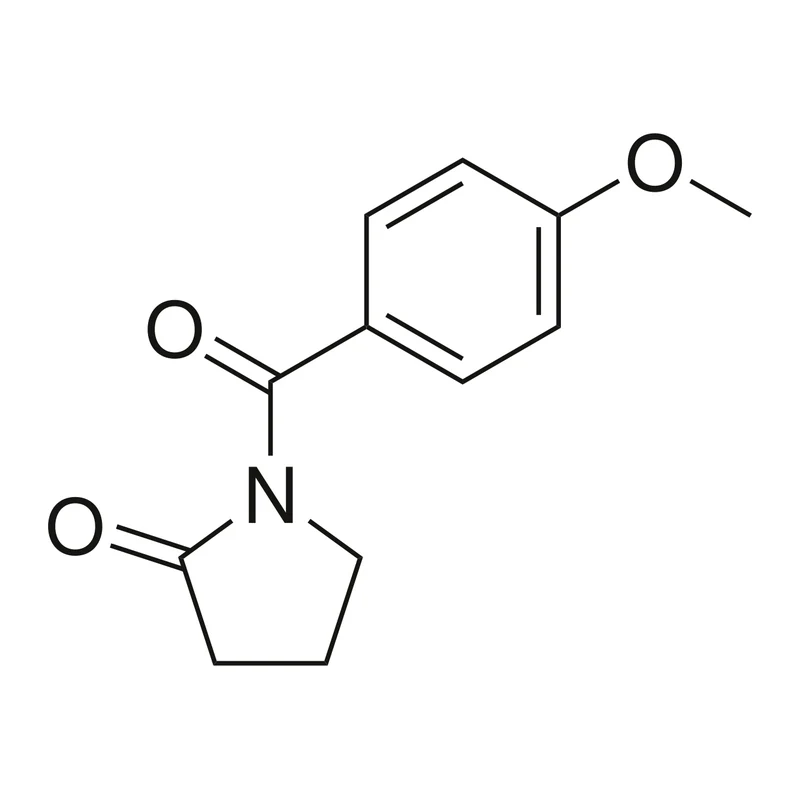
Aniracetam (1-(4-methoxybenzoyl)pyrrolidin-2-one, RO 13-5057) is a synthetic racetam developed by Roche in the 1970s. It is a positive allosteric modulator (PAM) of AMPA receptors with the most structurally characterized mechanism of action among racetams.
Mechanism of Action
Binds at the dimer interface of the AMPA receptor ligand-binding domain (S1S2), stabilizing the closed-cleft conformation. Slows deactivation (channel closing after glutamate dissociation) and desensitization (channel closing while glutamate remains bound). Cognitive effects are primarily attributable to slowing of deactivation. Secondary effects include increased cortical dopamine and serotonin release, and activation of the reticulothalamic cholinergic pathway (increased ACh release).
BDNF
Aniracetam shows the most pronounced BDNF upregulation among racetams. AMPA receptor activation via PI3K/Akt and MAPK/ERK cascades potentiates BDNF-mediated neuroplasticity.
Pharmacokinetics
Plasma T½ ≈ 0.5 h (rapid first-pass metabolism). Major metabolites: N-anisoyl-GABA (active), 2-pyrrolidinone, anisic acid. Despite short T½, effects last 4–6 h due to active metabolites. Lipophilic — good BBB penetration.
Preclinical Data
Anxiolytic and antidepressant effects in animal models. Improvement of spatial memory and cognitive flexibility. Neuroprotection against ischemia and oxidative stress.