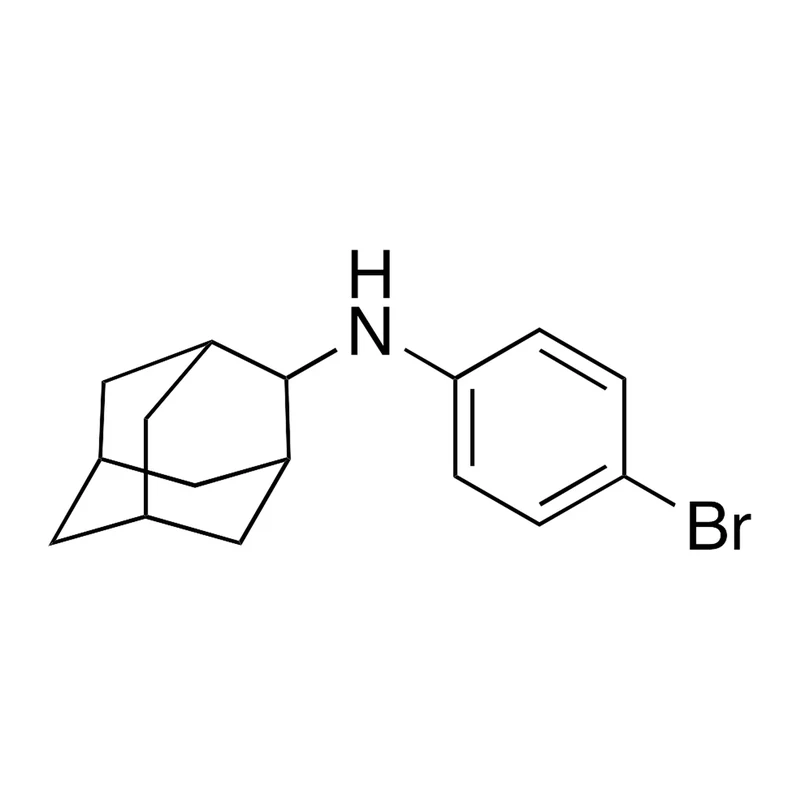
Compound description
What is Bromantane
Bromantane (ADK-709) is an atypical stimulant and actoprotector: a compound that raises physical and mental working capacity under difficult conditions without depleting the body's resources.
It was developed in the 1980s at the Research Institute of Pharmacology of the USSR Academy of Medical Sciences as an agent for preserving working capacity under hypoxia, high temperature and heavy exertion. It is a synthetic derivative of adamantane — the same structural class as amantadine and memantine. In Russia it was registered as a medicine under the name Ladasten for the treatment of neurasthenia.
Bromantane barely blocks the dopamine transporter and does not bind its receptors: the IC₅₀ for dopamine transport is 3.56 µM (3560 nM) against 28.66 nM for mesocarb — two orders of magnitude weaker — and such concentrations are unreachable at therapeutic doses; in the same study it had no effect on serotonin transport. Instead it switches on de novo dopamine synthesis through genomic activation of the genes for two key enzymes: tyrosine hydroxylase (TH) and DOPA decarboxylase (AADC).
TH activation is epigenetic: a single dose produces a 2–2.5-fold rise in gene expression in the rat hypothalamus within 1.5–2 hours, and it happens through cytosine demethylation in the promoter. In the ventral tegmental area, TH mRNA rises within 30 minutes and peaks at 220% an hour later. TH is the rate-limiting enzyme of the entire dopamine pathway, so up-regulating it widens the throughput of synthesis. This is why bromantane does not deplete transmitter stores.
The epigenetic profile is broader than dopamine. A single 50 mg/kg dose lowers histone deacetylase 1 (HDAC1) in the rat striatum and hippocampus and alters acetylation of histones H3 (Lys9) and H4 (Lys8) across different brain structures.
Neurotrophic support and plasticity. Bromantane raises BDNF and NGF expression and activates mitogen-activated kinases. In hippocampal slices, 10 µM converts short-term potentiation into the long-lasting form — the cellular correlate of learning and memory.
The anxiolytic component has a target of its own. A screen of 588 genes showed that a single dose changes the activity of 12 of them, and the authors name the GABA transporter 3 gene (GAT3/slc6a11) as one of the key targets: less GABA uptake means stronger inhibitory transmission. Hence the rare combination — stimulation without anxiety.
Clinical data. In a multicentre study of 728 patients (50–100 mg/day, 28 days), positive ratings reached 76.0% on CGI-S and 90.8% on CGI-I. The anti-asthenic effect appeared within the first 1–3 days and persisted a month after discontinuation; side effects were recorded in 3% of participants and 0.8% withdrew because of them. The design was open-label with no control arm. A separate placebo-controlled trial from 2009 confirmed the combination of psychostimulant and anxiolytic action. In healthy volunteers, a single 100 mg dose improved psychophysiological measures under mental fatigue without behavioural toxicity, and more markedly in stress-labile individuals.
The effect adapts to the person. An EEG study showed a rare property: the direction of action depends on the baseline EEG type. In people with a sthenic type bromantane works mainly as a psychostimulant, in those with an asthenic type as an anxiolytic.
Directions beyond stimulation. Bromantane normalises the subpopulation structure of T lymphocytes (CD4+/CD8+) in an anxiety-depression model and lowers IL-6 and IL-17 levels. The Canadian company Algernon Pharmaceuticals repositioned the compound (code NP-160) as an anti-fibrotic agent: in a preclinical model of non-alcoholic steatohepatitis it reduced fibrosis area by 59.9% against 54.1% for cenicriviroc. In 2025, data were published on anti-parkinsonian activity in a 6-OHDA mouse model: at 100 mg/kg, dopamine levels were 3.8 times higher than in the active control group.
It is used as a research compound for studying mechanisms of stress resistance, dopaminergic neurotransmission, epigenetic regulation of gene expression and cognitive function.