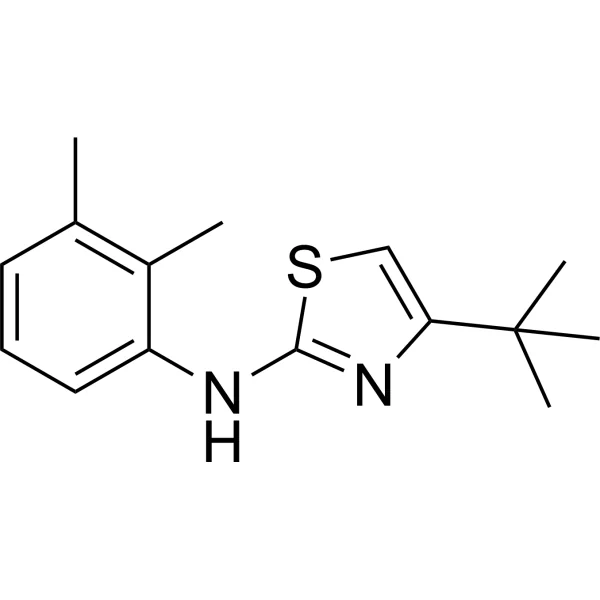
O4I4 powder (OCT4 inducer)
O4I4 · O4I-4 · O4I 4 · О4І4 · О4И4 · Oct4-inducing Compound 4 · OCT4 inducer · compound 23 · індуктор OCT4 · антагоніст CCR4 · CCR4 antagonist
O4I4 (Oct4-inducing Compound 4) is a small-molecule inducer of endogenous OCT4. It is neither a protein nor a viral vector: the compound switches on the cell's own gene, activating OCT4 and its associated signalling pathways across a range of cell lines (Cayman Chemical).
Why OCT4 is a special factor. It is one of the four Yamanaka factors whose discovery earned a Nobel Prize — the set that turns an ordinary somatic cell back into a pluripotent one. Within that quartet OCT4 is the central member and the only one that cannot be substituted (Wikipedia). Being able to switch it on with a small molecule rather than a genetic construct is what makes the O4I series interesting for regenerative medicine.
The main advantage is metabolic stability. Earlier generations of OCT4 inducers degraded too rapidly in vivo, which limited their use. O4I4 was developed specifically as a next-generation inducer with that problem solved (Eur J Med Chem, 2023). In the literature it appears as compound 23.
A substitute for exogenous OCT4 in reprogramming. O4I4 can act in place of externally delivered OCT4 in converting human fibroblasts to a pluripotent state (MedChemExpress). In practice this offers a route around viral transduction — the principal technical and regulatory bottleneck of classical reprogramming.
Lifespan extension in vivo. The 2023 work demonstrated an anti-ageing effect in two independent model organisms: the nematode Caenorhabditis elegans and Drosophila (Eur J Med Chem, 2023). For a compound acting through a pluripotency factor, this is a rare case where the effect is confirmed at whole-organism level rather than in cell culture alone.
A second activity. The molecule is also an antagonist of the chemokine receptor CCR4 (Cayman Chemical) — historically this 2-aminothiazole scaffold was developed precisely as a CCR4 antagonist back in 2006 (Bioorg Med Chem Lett, 2006), with the OCT4 activity discovered considerably later.
Why this is a research reagent only — and why that matters particularly here. OCT4 is regarded as a very powerful and potentially dangerous factor under uncontrolled activation. If it is switched on too strongly in adult tissue, cells can lose their specialisation and acquire pluripotent properties. Such cells are capable of forming teratomas — tumours containing tissues of different germ layers: hair, cartilage, neural tissue (Wikipedia). This is precisely why the compound's potency is simultaneously its main value in the laboratory and the reason it is not intended for human use.
Supplied as a powder, purity ≥97% (NMR), CAS 412008-21-0.